Greetings serious scholars,
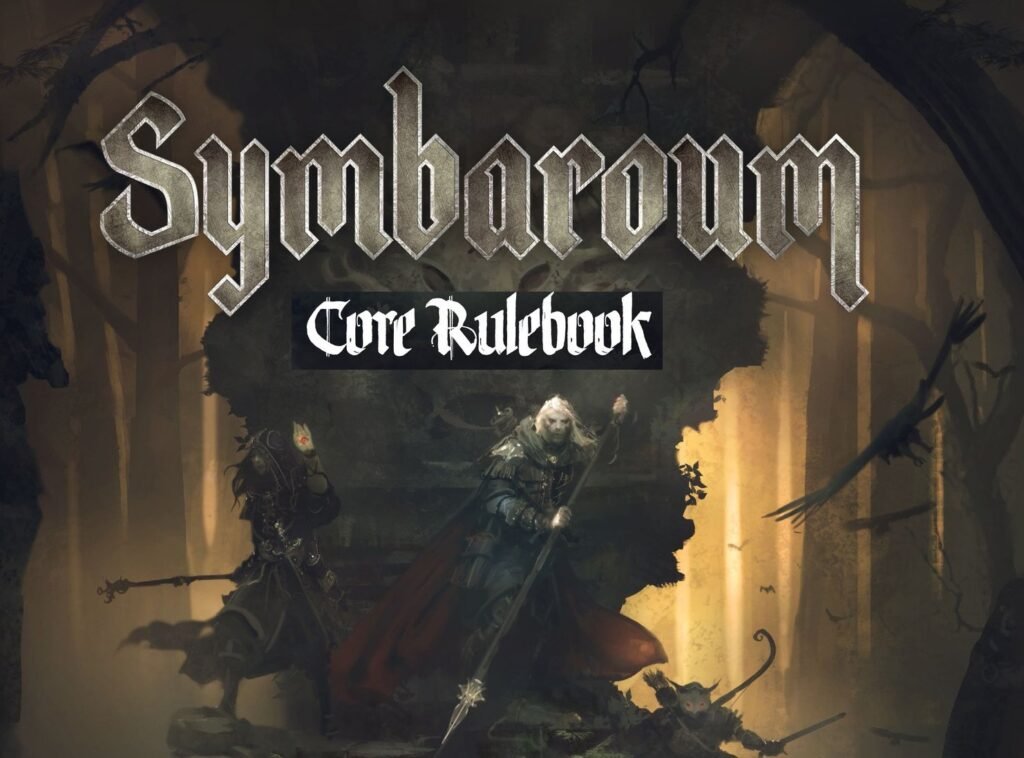
I recently attended a local convention. I thought they really did a great job with it. Shoutout to you, Flatcon, and your super cool charity Auction! It was at that convention that I was inspired to start working on The Middle Lands. One of the games I signed up for was a three-day affair set in the world of Symbaroum using the original Free League system (pre-5e conversion). Symboroum is an interesting setting, opting for a single location rather than a large sprawling world. Mechanically, it uses a variant of the Year Zero Engine from Mutant Year Zero.
I’ve been a fan of the Year Zero engine for a while. It’s no secret that my favorite system is the year-zero variant used in The Forbidden Lands. One of the interesting things this system does is treat magic much less restrictively than Dungeons & Dragons. Spell slots? No thanks. Spell levels? Nah, who needs em? How do we balance that? Maybe we don’t.
So, back to Symbaroum. The most striking thing about the spellcasting system in Symbaroum for me was corruption. This was similar to a concept I’d been mulling over ever since I started playing D&D all those years ago. So how does corruption work in Symbaroum? Well, essentially, during a scene, you can gain temporary corruption from casting spells. If this temporary corruption meets your corruption threshold, you roll a d4 and gain permanent corruption equal to the roll. There are other ways to gain corruption, and I urge you to check out the system, but it was this loop that really inspired me.
I loved the concept of corrupting magic. I’ve wanted a way to accomplish this in my own games for a long time. This may get me shunned in some circles, but I think mages should be powerhouses. I think of every mage I’ve ever seen in media, and they always lay waste to countless opponents. I know this is hard to make work in a TTRPG, and I’ve always wanted to try. When I sat down to that game of Symbaroum and saw how casters worked, something clicked. I’ll be honest, in Symbaroum, I think the spells weren’t powerful enough, and the consequences weren’t severe enough. In my mind, magic should be a corruption spiral.
If I stick to just using it sparingly, sticking to low-powered spells and casting cautiously, then I can cast for a lifetime. If powerful magic had real consequences, though, well, that’s drama. I think the essence of what makes a TTRPG great is meaningful choices. It’s what separates it from a movie or a great book. Those epic moments hinge on our decisions! That’s where the real magic happens.
When I played Symbaroum, I saw an avenue to creating the mage I’ve always wanted. This spark of an idea laser-focused me on building my first fantasy heartbreaker. The following week, I thought about what I had seen in the Symbaroum game, and that weekend, I started typing. By the end of that weekend, I had the bones of The Middle Lands. I took the idea of temporary and permanent corruption and re-worked it. I wanted every spell to be a measured gamble, so I used the Year Zero mechanics to reinforce that. When you cast spells in The Middle Lands, anyone can become temporarily corrupted. I created a skill that allows you to channel corruption to avoid it, but it’s not guaranteed. I also made it so temporary corruption doesn’t just go away at the end of a scene, as it does in Symbaroum. Instead, it is something you carry for the adventuring day and hopefully expel when you rest.
I have since been working on the consequences of corruption. In my system, once you hit your threshold, the excess corruption spills over and becomes permanent. There are ways to try to eject permanent corruption, but it is difficult. This permanent corruption is the key to the death spiral that is casting. As you accumulate permanent bribery, there will come a point at which you must roll on corruption tables; these tables will have thematic and possibly mechanical consequences for taking on that corruption. I hope that these moments will create dramatic table moments. The mage and their party are backed into a corner, outmatched, and out armed. The mage then has the opportunity to bring their full power to bear to save their friends. This choice does not come without weight; they risk their character’s future in that moment. Consequential choices create drama in a TTRPG. The trick is to marry the mechanic and the fiction.

Another advantage of creating this corruption system is that I can make spellcasting more dynamic. Mages can choose how much power to put behind a spell. The more power they put behind a spell, the higher the risk of corruption. I intend to create a self-governing power system. The goal is that, in mundane moments, players will play it safe and push themselves only when it really counts, those dramatic moments when success is paramount. One way I’ve tried to accomplish this is by allowing the player to choose how many dice to roll in their spellcasting dice pool. This controls their exposure to corruption by limiting the potential for corruption.
This revelation about magic and these subsystems was certainly the spark that set this project ablaze. As I continue to develop The Middle Lands, I plan on sharing more about my inspiration and the design process. I also intend to freely share all alpha and beta versions of The Middle Lands in hopes of gaining feedback from you, Serious Scholars. I don’t expect to slay the dragon with this system, but I do hope to introduce something a little different into the TTRPG landscape. I’ve certainly taken inspiration from the OSR with my bi-weekly AD&D game, and there’s no doubt that 5e D&D was a formative game for me. I hope I can take these influences and more and forge them into something you all can use as a tool to tell incredible stories!
In other news, I recently designed a quick solo RPG for use with PUM Companion, a very cool piece of software that facilitates solo roleplay. I created a quick conflict resolution ruleset for a solo experience set in the Highlander universe. This module takes you to Chicago, where the city sees an uptick in unexplained events related to the immortals residing there. This module is free and a featured event on the PUM Companion Discord Channel. I’d be honored if you’d check it out and maybe share your stories in the Discord channel.
That’s all for now, Serious Scholars. Until next time remember, serious worlds require serious wizards.
-The Serious Wizard
Leave a Reply